
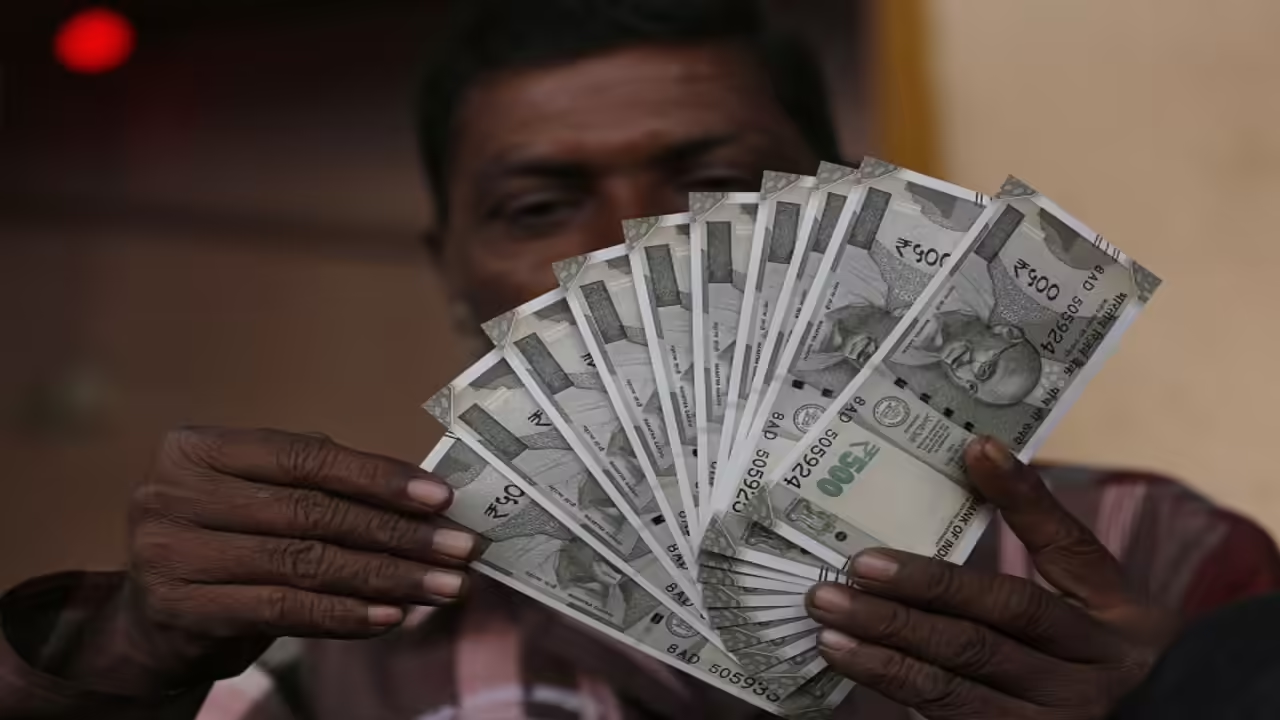
Introduction : A Situation That Confuses and Worries Many People
You withdraw cash from an ATM or receive money from a bank counter.
Later, while checking the notes, you notice something unusual.
The note looks different.
You start wondering:
- Is this a fake note?
- What should I do now?
- Will I get my money back?
- Can I face any legal trouble?
As someone who has worked in banking, I can tell you this:
Receiving a fake currency note is rare, but not impossible.
What matters most is how you respond.
This blog explains everything in simple language:
- What counterfeit currency is
- How to identify it
- What to do immediately
- Bank procedures
- Your rights and responsibilities
What Is a Counterfeit Currency Note?

A counterfeit currency note is a fake note that imitates genuine Indian currency.
It is designed to look similar to original notes but is not issued by the Government of India.
Counterfeit notes may:
- Look slightly different in color
- Have printing issues
- Miss security features
- Feel different in texture
These notes are illegal and cannot be used for transactions.
Why Fake Notes Circulate
Counterfeit currency usually enters circulation through:
- Illegal activities
- Unverified cash transactions
- Informal markets
- Large cash exchanges without checking
Banks and ATMs have strict systems, but occasionally, fake notes may still reach customers.
First Rule: Do Not Panic
If you suspect that you have received a fake note, stay calm.
You are not at fault if you received it unknowingly.
However, how you act next is important.
Read More : How to Safeguard Your Bank Account in 2026
What To Do If You Receive a Fake Currency Note
If you receive a suspected fake note from ATM or bank, follow these steps:

Step 1: Do Not Use the Note
Do not try to spend the note.
Using counterfeit currency knowingly is illegal.
Even unknowingly using it can create complications.
Step 2: Visit the Bank Branch Immediately
Go to the nearest bank branch, preferably the same bank where you received the note.
Explain clearly:
- Where you received the note (ATM or counter)
- Date and time of transaction
- Amount withdrawn
If the note was from an ATM, keep:
- Transaction slip
- SMS alert
These help establish your case.
Step 3: Submit the Note to the Bank
The bank will examine the note.
If found suspicious or fake, the bank will:
- Confiscate the note
- Issue an acknowledgment receipt
This process is governed by guidelines of the Reserve Bank of India.
Step 4: Collect the Receipt
This is very important.
The bank will provide a receipt containing:
- Denomination of note
- Serial number
- Date of submission
- Branch details
Keep this receipt safely.
It is your proof that you submitted the note.
Step 5: Follow Up If Required
In some cases, the note may be sent for further verification.
You may follow up with the bank if required.
Important Rule: Fake Notes Are Not Returned
This is a critical point every customer must understand.
👉 Once a note is identified as counterfeit, it is not returned to the customer.
The note is seized and sent for investigation.
This is as per regulatory guidelines.
There is usually no reimbursement for counterfeit notes.
What If You Received the Note From an ATM?
This is one of the most searched queries:
“Fake currency note received from ATM – what to do?”
If you received the note from an ATM:
- Report it immediately to the bank
- Provide ATM details (location, time)
- Submit transaction proof
Banks may investigate the ATM cash loading records.
However, reimbursement is not guaranteed and depends on investigation.
What If You Received It From a Bank Counter?
If the note was received from a bank counter:
- Report it immediately to the same branch
- Inform the officer
- Submit the note
Banks are expected to verify cash before issuing, so such cases are taken seriously.
Should You Inform Police?
In most cases, reporting to the bank is sufficient.
However, police involvement may be required if:
- Large quantity of fake notes is found
- Suspicious activity is involved
- Bank advises filing a complaint
The objective is to prevent circulation of counterfeit currency.
How Banks Handle Counterfeit Notes
Banks follow strict procedures under RBI guidelines.
When a fake note is detected:
- It is stamped as counterfeit
- Details are recorded
- It is removed from circulation
- It is reported for investigation
Banks are not allowed to reissue such notes.
Can You Get Your Money Back?
This is the most practical concern.
In most cases:
👉 Customers do not get reimbursement for counterfeit notes.
This may feel unfair, but the logic is:
- Fake currency has no legal value
- Banks cannot compensate without clear proof of source
That is why early reporting is important, especially in ATM cases.
How to Identify Fake Currency Notes
While detailed detection requires expertise, you can check basic features:
- Security thread
- Watermark
- See-through register
- Printing clarity
- Raised printing
If something feels unusual, trust your instinct and verify.
Download and Install RBI’s fake note detection app – MANI to immediately identify whether a note is fake or not.
Tips to Avoid Receiving Fake Notes
Prevention is better than reaction.
Follow these simple practices:
- Check notes when receiving large cash
- Avoid accepting torn or suspicious notes
- Use digital payments when possible
- Withdraw cash from reliable ATMs
- Count and verify cash at bank counter
Awareness reduces risk significantly.
Common Mistakes People Make
From experience, these are common errors:
Ignoring the issue
Some people keep the note and do nothing.
Trying to circulate it
This can create legal complications.
Not taking receipt from bank
Without receipt, you lose proof.
Delaying reporting
Delay weakens your case, especially for ATM withdrawals.
Banker’s Perspective: Awareness Matters More Than Fear
Fake currency is not very common in daily banking.
But awareness is essential.
Banks and regulators continuously improve systems to detect counterfeit notes.
Customers play an important role by:
- Reporting immediately
- Not circulating suspicious notes
- Staying informed
Final Words
Receiving a fake currency note can be uncomfortable.
But it is not something to panic about.
What matters is:
- Acting quickly
- Following proper procedure
- Staying informed
Banking awareness is not only about saving money.
It is also about handling situations correctly when something unexpected happens.
In upcoming blogs, we will continue to simplify practical banking topics that affect everyday customers.
FAQ
Q1. What should I do if I receive a fake currency note from ATM?
Report it immediately to the bank with transaction proof and submit the note.
Q2. Can I get a refund for a fake currency note?
Generally, no. Counterfeit notes are not reimbursed unless proven otherwise.
Q3. How do banks handle counterfeit currency?
Banks confiscate the note, issue a receipt, and send it for investigation as per RBI guidelines.
Q4. Is it illegal to use a fake currency note?
Yes. Using counterfeit currency knowingly is illegal.
Q5. How can I identify a fake Indian currency note?
Check security features like watermark, security thread, and printing quality.